
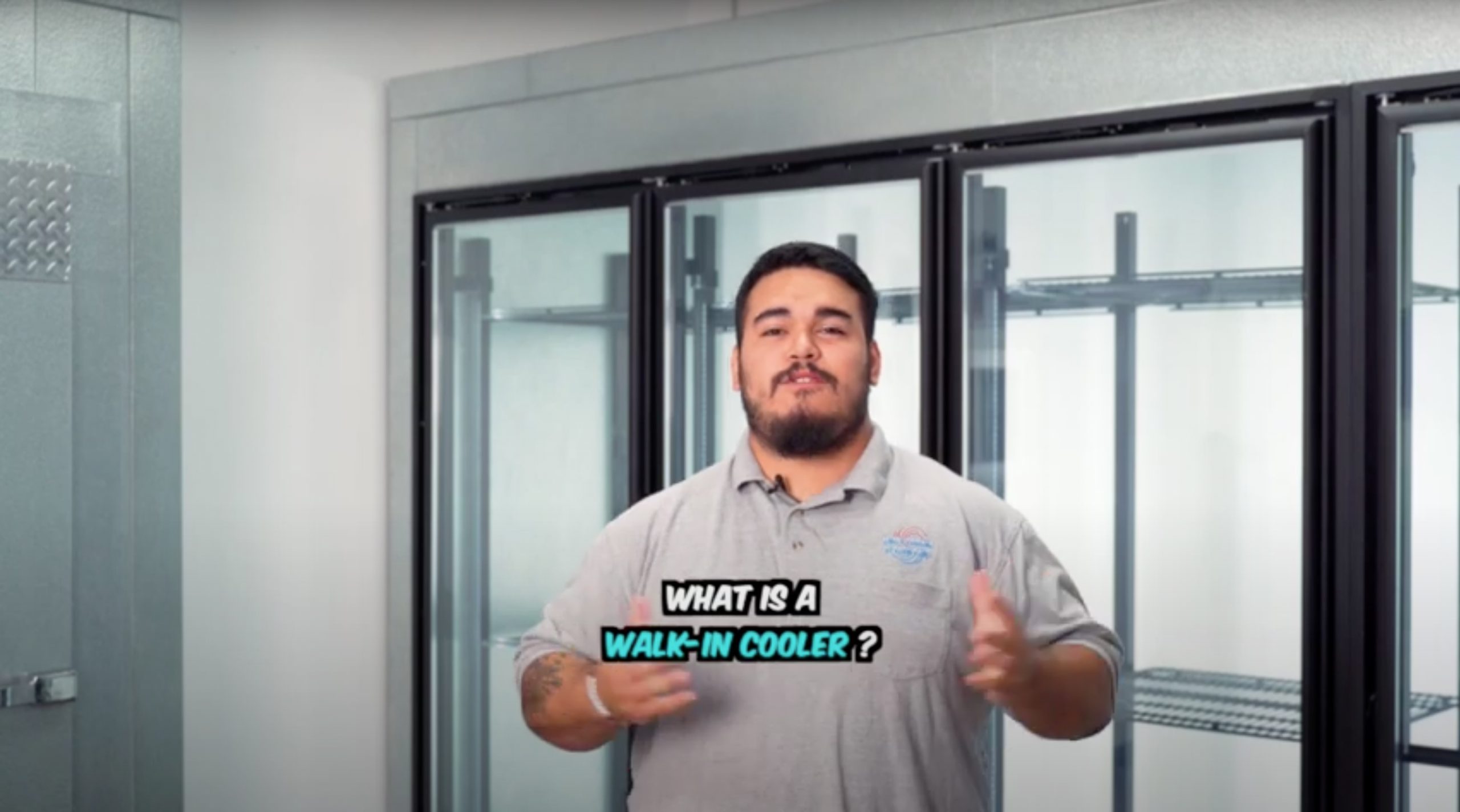
Systems of refrigeration are available in all shapes and sizes, but walk-in coolers and freezers are some of the largest. These insulated spaces are perfect for storing (or displaying) frozen or refrigerated food and other perishable items, making them ideal for use in the food service or sales industry. Compared to commercial refrigerators and freezers used in supermarkets and food processing/packaging, central refrigeration systems usually provide larger units.
What is the walk in cooler ?

Walk-in coolers usually have a temperature between 35 °F and 45 °F, while walk-in freezers are below 35 °F. A packed unitary or split refrigeration system cools the room and has the following components:
- an evaporator fan coil, which is often located on the ceiling
- a compressor, which is typically situated outside the room
- a condenser coil cooled by water or air is used in the refrigeration process. The refrigerant circulates from the compressor to the condenser and then into the expansion device. After that, it goes through the evaporator and back to the compressor. This refrigeration system works by continuously circulating a refrigerant throughout the room. The refrigerant absorbs heat from the room, which is then expelled through evaporation and condensation. The heat can be pushed out into the building, outdoors, or through cooling water.
What do you need to know about Walk-in Coolers and Freezers?

To select the most productive Cooler or Freezer, take into account the following:
- The temperature of the appliance must stay
- The tasks the machine must do (refrigeration, freezing, or both)
- The layout of doors required for access and show
- How quickly cooling or freezing must occur (for well-being reasons)
Choosing increased efficiency

Many options are available to reduce energy transfer and, as a result, energy usage:
The insulation
There are several ways to improve the insulation, including:
- Installing insulated panels in your walls, ceiling, and floors
- Applying gaskets and sealants to your doors for a tighter fit
- Replacing old materials with newer, more efficient ones with better insulating properties.
The lighting:
- Energy-efficient LEDs and electronic lighting ballasts.
- Using fiber optic lighting that is gathered from rooftop collectors.
- Turning the interior lights on only when someone is present with occupancy sensors.
The In-and-out:
As you walk in, you’re enveloped by a gentle gust of air from the automatic doors. You can choose between the standard entryway and the revolving doors. Automated door opening and closing systems make it easy and convenient to get in and out. Air curtains, especially recirculating models, and even strip curtains help to keep the heat in. An automatic evaporator fan shuts off whenever the walk-in door is opened to conserve energy. Controls and monitors:
Override the refrigeration system for off-peak hours
Monitor air and water infiltration sensors to condition the insulation
Control the evaporator fan to run at variable speed or cycle on and off during periods when the compressor is inactive. More efficient technologies:
- Compressors with higher efficiency
- Evaporator and condenser fan blades that are more efficient
- Improved evaporator and condenser coils
- More efficient fan motors, e.g., three-phase, ECM, and PSC You can contact or follow us on social media to stay updated and get more information.


